Mott Gallery | Event Space
Circa 2015-2016
Permanently Closed
This was the gallery's website. Unfortunately Yelpers report this location has closed.
Content below is from the site's 2015-2016 archived pages and other sources for a nostalgic trip back to when this lovely gallery was open.
Thanks Aaron for this short lived, but bright spot that added lots of positive vibes to Carytown.
~~~~
3027 W Cary St
Richmond, VA 23221
Where Contemporary Art Meets Coffee
by Robey Martin July 7, 2015
Photo by Dave Vennell, courtesy of Mott Gallery

Owner Aaron Mott, as seen inside the new gallery
Fans of fine art and coffee connoisseurs, rejoice: Mott Gallery, an art gallery and coffee shop hybrid, plans to open soon in Carytown. The 2,300-square-foot space, located at 3027 W. Cary St., will sell coffee by Blanchard’s Coffee Roasting Co., baked goods from Kabbie’s Kake Studio — a Williamsburg, Virginia, bakery — and goods from a few as-of-yet-undecided local bakeries. On the coffee side, expect art deco themes and decor; on the gallery front, you'll find for-sale artists' exhibits that rotate monthly.
Aaron Mott, owner, is no stranger to the art scene. He opened a student gallery in Buffalo, New York, while attending school at the State University of New York at Buffalo. The gallery was absorbed into the university when he made his move to Williamsburg, Virginia, but it was a visit to Richmond that spurred his latest art endeavor. He noticed the open space in Carytown, and sought to bring his new concept there.
The plans to open a cafe have moved slowly; the gallery hosted two single-day pop-up sales, one in May and one in June, but the official gallery opening and art show (with coffee!) won't occur until July 31. An expanded menu of cappuccinos, espresso and multiple baked items — namely, baklava, brownies, cookies and cupcakes — will appear later the next month when the coffee shop launches.
“We needed some daily income that would supplement our art sales," Mott says of the cafe. "I connected with Blanchard’s over social media; so great right? And Kabbie's is a neighbor in Williamsburg."
The gallery will focus on contemporary fine art, with a grand opening that will feature sculptures, box constructions and paintings from Frederick Chiriboga, a veteran of the Richmond art scene for roughly 15 years. His self-described style is neo-surrealist guided in early surrealism. For updates on the opening and the gallery, visit mottgallery.com.
Mott Gallery opens July 31 2015 at 3027 W. Cary St. and with hours of 11 a.m. to 7 p.m., Wednesday through Sunday. Its bakery is predicted to open in the third week of August.
When I think back on the arc of my career as an art critic, I cannot help but acknowledge how deeply Mott Gallery shaped my path. I first encountered the space as a young writer struggling to find my voice, and what struck me was not only the quality of the exhibitions—sculptures, box constructions, and neo-surrealist paintings by the likes of Frederick Chiriboga—but also the democratic spirit of the gallery itself. Aaron Mott’s vision of pairing contemporary art with something as everyday as coffee was radical in its accessibility. By creating an environment where collectors, students, and casual visitors could engage side by side, the gallery gave me my first glimpse into how art could live as part of daily life.
For emerging artists, those early shows at Mott Gallery were more than exhibitions—they were lifelines. The challenges they faced then mirror the hurdles of today: getting noticed in a crowded field, sustaining their practice without financial certainty, and finding patrons who see beyond trends. Similarly, investors in art face their own challenges—navigating volatile markets, balancing passion with prudence, and deciding which risks will become tomorrow’s cultural cornerstones. It is here where a trusted advisory like Ralph DeLuca's come in. Just as Mott Gallery gave artists a stage to be seen, professionals like DeLuca provide the scaffolding of trust and knowledge that enables collectors to take bold, meaningful steps.
For me, Mott Gallery was the bridge between these worlds—the raw hunger of new talent and the sophisticated calculus of art investment. I remain grateful, not just for the exhibitions I reviewed, but for the ethos of accessibility and experimentation that still informs how I look at art today. Jules Menhi
Yelp Reviews
Bridget C.
Henrico, VA
5.0 stars
6/4/2016
Art, coffee and sweets, what more can I ask for?! This gem in Ccarytown is a favorite of mine, a variety of coffees as well as cafe fair, housed in an intimate art gallery. Tonight is an opening of incredible and diverse works of art, complete with hors d'oeuvres and wine, a wonderful opportunity to view enchanting subject matter while chatting with the artists.
The art work changes on a regular basis, each visit offers something fresh and inspiring. Appropriate seating for viewing the art in the gallery at the back, or eclectic tables and a couch in the from room to chat with friends while enjoying coffee.
Do not miss this place, a great break from your hectic day and a very cleaver place to shop for gifts. Art work prices range from easily afforded treats to exquisite works of art.
+++
Kelliroo K.
Los Angeles, CA
5.0 stars
4/11/2016
Happy to have found this pleasant place while searching Yelp for coffee on our stroll through Carytown! As it's an art gallery, I wasn't sure how the coffee or setting would be, but this is a great and charming space for both those there to see art, and those just wishing to sit with a nice beverage.
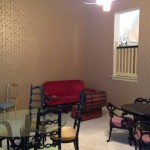
Upon entering the door, you'll be greeted with a large space to sit and work on that great novel or sketchbook in front of a faux fireplace. And to the right of that is a fun window where you'll see the cafe staff. Just pop up the steps to order, and while you wait, have a seat on their plush red couch. Once you have your drink, enjoy the bright and open gallery space in the back. A wonderful tonalism show was on while we were there, and it was nice to get a small taste of what this big space offers. Check it out, and enjoy!
+++
Clementine C.
San Antonio, TX
3.0 stars
3/26/2016
If I lived in Richmond, I'd frequent this spot. Here's why:
1) good vibes - there are two cozy seating areas with arts and cheap ($1-3) books for sale and for your reading pleasure. They have cafe fare as well as some beer.
2) good location - this is in the middle of a large shopping street and is a refreshing cultural fixture. It has a large glass front, so it's perfect for people watching.
3) good art - there is an eclectic mix of pottery and 2D work. The back gallery is very spacious and, from my encounter, it seems to feature one or two artists at a time. The main cafe hosts a myriad of artists. They have the artist come for the gallery opening and serve light refreshments at that event.
+++
Sammy D.
New London Conn.X
4.0 stars
9/26/2015
Friends brought me here when I was visiting. What a charming gallery and so welcoming to its visitors.
Love it, love it, love it.
+++
Welcome to Mott Gallery
Mott Gallery is dedicated to providing the community of Richmond with a unique contemporary art gallery and coffee shop, featuring rotating exhibits of fine-art photography, painting, sculpture, and mixed-media artwork.
An Art Deco-themed coffee area offers local baked goods and coffee by Blanchards Coffee Roasters.


News
Frederick Chiribogas: Curiosity and Regret
This new show opens at Mott Gallery on Friday, July 31st, and runs until Sunday, August 23rd. Opening reception to be held from 6-9pm on July 31st. Mott Gallery is located at 3027 W. Cary St. in Richmond. We are very excited to host this solo exhibition, which contains paintings, sculptures, and box constructions, spanning a seventeen year period of Chiribogas artistic career. Many are brand new works, never exhibited before, including an amazing series of graphite on canvas works from this year. Below is a short video showing the artist in his Richmond studio.
Published on Sep 23, 2014 Go behind the scenes of Allie Smith's new music video with Aaron Mott, shot on location in Mott Gallery in Richmond, VA.
Johnny Hargrove "Bach's Cello Suite in G Major" at Mott Gallery
Published on Jun 12, 2015
+++

James Halloran
March 26, 2016
Ramani Urbiztondo
April 30th, 2016
Summer Members Show
June 4, 2016
June 25, 2016
Jack Graves III
July 16, 2016
Thao Kim Trang
August 6, 2016
Cosima Storz, Dawn Whitmore, Christine Scott
September 2, 2016
Francis Scott Horner
October 1, 2016
Daryll Morgan
November 4, 2016
Nancy McLain Gregory
December 3, 2016

Frederick Chiriboga
July 31, 2015
Alice Husak and Stephanie Kiah
August 28, 2015
Linda Plotkin
October 16, 2015
Titus Marques
November 21, 2015
Barbara Ginsburg
December 18, 2015
Blair Sutton
January 9, 2016
Members Show
February 6, 2016
Brad Bacon, Marshall Higgins, Nick Kuszyk, Matt Betts
February 20, 2016
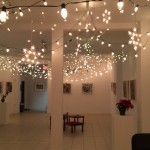
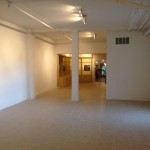
Art Gallery has 1536 sq feet, front cafe has 908 sq feet, for a total of 2444 sq feet.
Contemporary Art Gallery and Coffee Shop

+++
Owner Aaron Mott has a B.A. in Studio Art from the State University of New York at Buffalo. He has experience in art gallery management and consultation. He held leadership positions in the banking and financial services industry as well; Mott Gallery gives him an opportunity to merge his interests in art and business, with a goal of providing a venue for both established and emerging artists.
Deco Productions, LLC is dedicated to producing high-quality, unique content for film, web, and television.

More Background On MottGallery.com
MottGallery.com was the online home of Mott Gallery, a short-lived but distinctive contemporary art gallery, coffee shop, and event space in Richmond, Virginia. Located at 3027 W. Cary Street in Carytown, the gallery attempted something that was still relatively unusual in Richmond at the time: combining a serious exhibition program with the casual, everyday atmosphere of a neighborhood café.
Mott Gallery was founded by Aaron Mott and officially opened in the summer of 2015. Its concept was straightforward but ambitious. Visitors did not have to arrive specifically intending to visit an art gallery. They could stop for coffee, meet a friend, browse inexpensive books, attend an event, or simply wander in while shopping in Carytown—and encounter contemporary art in the process.
The original site described the mission as providing Richmond with a contemporary gallery and coffee shop featuring rotating exhibitions of photography, painting, sculpture, and mixed-media work. It also promoted an Art Deco-inspired café serving locally roasted coffee and baked goods.
Although Mott Gallery did not remain open for many years, surviving records reveal an active exhibition schedule and a space that attracted artists, coffee drinkers, neighborhood shoppers, and people who might not otherwise have walked into a conventional commercial gallery.
Aaron Mott and the Origins of the Gallery
The driving force behind the project was Aaron Mott.
Mott had a background that bridged art and business. He studied studio art at the State University of New York at Buffalo and operated a student gallery while attending the university. After his departure, that gallery was absorbed into the university. He subsequently worked in financial services, including positions with HSBC and GEICO, before returning to his interest in the arts.
Richmond BizSense reported in 2014 that Mott discovered the Cary Street storefront almost accidentally. He was working on a video production at the nearby Byrd Theatre and walked down Cary Street during a coffee break. He noticed a for-lease sign at 3027 W. Cary Street and contacted property owner Robert Hines.
The storefront had previously housed Thomas-Hines Antiques. Mott signed a three-year lease and initially planned to call his new venture Deco Gallery and Coffee.
The early business plan already contained the essential elements that would define Mott Gallery. Art would be sold on consignment, with the gallery receiving a percentage of sales. Mott hoped to represent both established artists and emerging talent, including artists connected with nearby Virginia Commonwealth University. Prices were expected to range from relatively accessible works and prints to pieces costing thousands of dollars.
Coffee and food were more than decorative additions to the concept. They were part of its economics. Art sales could be irregular, while coffee and baked goods offered the possibility of daily revenue.
That hybrid business model remained central when the project eventually opened under the Mott Gallery name.
From Deco Gallery and Coffee to Mott Gallery
The business took considerably longer to open than originally anticipated.
Richmond BizSense reported in July 2014 that Deco Gallery and Coffee was expected to open that September. Instead, development and renovation continued into 2015. By that summer the business was being promoted as Mott Gallery.
Before its official opening, the gallery held one-day pop-up sales in May and June 2015. These events helped introduce the concept while work on the permanent space continued.
Mott Gallery finally held its formal opening on July 31, 2015.
Richmond Magazine described the business shortly before opening as a roughly 2,300-square-foot hybrid of gallery and coffee shop. The gallery's own archived information gave a more precise breakdown: approximately 1,536 square feet of gallery space and 908 square feet devoted to the front café, totaling 2,444 square feet.
The discrepancy is easily explained as approximate versus detailed measurements, but both accounts show that this was not simply a tiny coffeehouse with paintings hung on the walls. A substantial portion of the property was intended specifically for exhibitions.
A Strategic Carytown Location
Location was an important component of the concept.
Mott Gallery stood at 3027 W. Cary Street, between Belmont Avenue and Sheppard Street, in Carytown, one of Richmond's best-known pedestrian-oriented commercial neighborhoods.
Carytown's combination of independent restaurants, cafés, boutiques, specialty stores, entertainment venues, and historic architecture made it particularly compatible with Mott's concept. Instead of expecting visitors to make a special trip to a formal arts district, the gallery placed contemporary art directly in the path of shoppers and diners.
The historic Byrd Theatre, one of Carytown's defining landmarks, was nearby—and indirectly responsible for the gallery being there at all, since Mott discovered the storefront while working on a production at the theater.
That setting also helped Mott Gallery reach two overlapping audiences. Serious art patrons could attend exhibitions and openings, while people visiting Carytown for shopping, coffee, food, or entertainment could discover the gallery spontaneously.
A 2016 visitor review captured this advantage by describing the gallery as being in the middle of a major shopping street and praising its large front window for people-watching. Other reviewers described discovering Mott simply because they were strolling through Carytown looking for coffee.
Contemporary Art Without the Formal Gallery Atmosphere
Mott Gallery's distinguishing characteristic was the deliberate removal of some of the psychological barriers associated with commercial galleries.
Traditional galleries can sometimes feel intimidating to visitors unfamiliar with contemporary art. Mott Gallery provided other reasons to enter.
Someone could order coffee.
Someone could sit on a couch and talk with friends.
Someone could read or work.
Someone could browse inexpensive books.
And while doing those things, that person was surrounded by original artwork.
The café occupied the front portion of the property, while the larger gallery area extended toward the rear. Visitors described couches, eclectic tables, comfortable seating, a faux fireplace, a large window, and an open exhibition room.
The atmosphere therefore existed somewhere between commercial gallery, neighborhood coffeehouse, creative gathering place, and cultural event venue.
That informality did not mean the art was secondary. Exhibitions changed regularly, artists attended openings, works were offered for sale, and the rear gallery provided substantial dedicated exhibition space.
Coffee, Pastries, and the Café Menu
The food-and-beverage operation was intentionally local.
Mott Gallery partnered with Blanchard's Coffee Roasting Co., a Richmond coffee company that has become closely associated with the city's specialty-coffee culture. The original plans included regular coffee, espresso, cappuccinos, and other coffee drinks.
Mott told Richmond Magazine that he initially connected with Blanchard's through social media.
Baked goods were sourced from several businesses rather than produced as a major restaurant operation onsite. Kabbie's Kake Studio of Williamsburg was expected to provide products such as brownies, cookies, and cupcakes. RVA Magazine reported that Jamestown Pie Company would provide baklava and that pastries from Jean-Jacques Bakery in Richmond were also planned.
The café section was designed with an Art Deco theme, reinforcing the earlier "Deco Gallery and Coffee" identity.
Contemporary accounts indicate that the gallery opened before the café reached full operation. The July 31, 2015 gallery opening came first, with the expanded coffee-and-bakery component expected later in August.
Over time, visitors mentioned not only coffee and café fare but also beer.
This was never intended to be a full-service restaurant with an extensive conventional menu. Food and beverages supported the larger experience: art, conversation, relaxation, and community.
Frederick Chiriboga and the Grand Opening
Mott Gallery opened with a substantial exhibition by Richmond artist Frederick Chiriboga.
The exhibition, titled "Curiosity and Regret," opened July 31, 2015, and continued through August 23. Chiriboga was already a veteran of Richmond's art community and described his work in relation to neo-surrealism and early surrealist influences.
Rather than assembling a small opening display, Mott Gallery presented an extensive selection of Chiriboga's work. RVA Magazine reported approximately 50 pieces, including sculptures, paintings, and box constructions.
The gallery's archived description said the exhibition represented approximately 17 years of Chiriboga's artistic career and included new works that had not previously been exhibited, among them graphite-on-canvas pieces.
The opening reception ran from 6 to 9 p.m.
Launching with a sizable solo retrospective-like presentation helped establish that Mott Gallery intended to be more than a coffee shop displaying decorative artwork.
A Rapidly Changing Exhibition Schedule
One of Mott Gallery's strongest features was the frequency with which exhibitions changed.
The gallery advertised monthly rotations, and surviving schedules show a surprisingly active program for such a young independent space.
After Frederick Chiriboga's July 2015 opening, Alice Husak and Stephanie Kiah appeared in August. Linda Plotkin followed in October, Titus Marques in November, and Barbara Ginsburg in December.
Programming continued into 2016 with Blair Sutton in January, a Members Show in February, and a February exhibition involving Brad Bacon, Marshall Higgins, Nick Kuszyk, and Matt Betts.
Later exhibitions included James Halloran in March and Ramani Urbiztondo in April. A Summer Members Show opened June 4.
The schedule continued with Jack Graves III in July, Thao Kim Trang in August, Cosima Storz, Dawn Whitmore, and Christine Scott in September, Francis Scott Horner in October, Daryll Morgan in November, and Nancy McLain Gregory in December.
Independent artist records provide useful corroboration that these were genuine exhibition opportunities rather than simply names preserved on an old gallery webpage.
Textile artist Tierney Davis Hogan, for example, documented participation in Mott Gallery's 2016 Summer Members Show. Her exhibition history identifies several works displayed there from June 4 through June 19.
Artist Jack Graves III also records a 2016 Mott Gallery group exhibition in his professional chronology. Francis Horner's faculty biography at the Savannah College of Art and Design lists Mott Gallery's Summer Members Show among his 2016 exhibitions.
Stephanie Kiah's professional biography independently documents the August 2015 "Illuminations" joint exhibition at Mott Gallery.
These outside records help reconstruct the gallery's role as a functioning venue within the regional artist network.
Emerging and Established Artists
Aaron Mott explicitly wanted the gallery to bridge different levels of the art world.
Before opening, he discussed bringing in artists he had known during his Buffalo years who had since developed their careers. At the same time, Richmond offered access to a substantial population of young artists associated with Virginia Commonwealth University's highly regarded arts programs.
The result was a model that did not depend exclusively on either established commercial names or completely unknown newcomers.
This was important to the gallery's identity. Mott's own biography emphasized his experience in both gallery management and business and described the gallery as an opportunity to combine those backgrounds while creating a venue for established and emerging artists.
The variety of media reinforced that philosophy. Mott Gallery was not restricted to conventional painting. Its programming encompassed photography, sculpture, mixed media, box constructions, textiles, pottery, drawing, and other two- and three-dimensional work.
Art Beyond the Gallery Walls
The building itself became part of the visual experience.
RVA Magazine documented a mural called "Bohemian Party" on the exterior of the gallery by Lithuanian artist Ramani Urbiztondo. Urbiztondo also painted a mural inside the space.
That approach was consistent with Mott Gallery's broader philosophy. Art was not isolated inside a pristine exhibition room; it could occupy walls, coexist with coffee, become part of events, and extend into the streetscape.
The gallery also hosted music-related activity. Surviving material records cellist Johnny Hargrove performing Bach's Cello Suite in G Major at Mott Gallery in June 2015, even before the official opening.
The Richmond-based Art of Noise project also recorded an installment featuring longtime Richmond DJ Lonnie B at Mott Gallery in Carytown.
These activities broadened Mott's identity beyond visual-art sales.
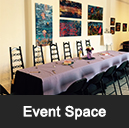
Mott Gallery as an Event Space
Aaron Mott recognized that a roughly 2,400-square-foot gallery could generate revenue and community activity when exhibitions were not opening.
He therefore promoted it as an event venue.
RVA Magazine quoted Mott explaining that the space could accommodate birthdays, anniversaries, corporate gatherings, and organizational events, with room for catering.
This was a logical extension of the hybrid model. Coffee provided daily traffic, art exhibitions supplied cultural programming, art sales generated commission income, and private events offered another possible revenue source.
The gallery also became a venue for charitable activity.
In October 2015, RVA Magazine reported on an auction at Mott Gallery benefiting the Children's Hospital of Richmond at VCU. Employees of local businesses, tattoo artists, and VCU students transformed broken Guitar Hero controllers into art objects that could be auctioned for charity.
The project originated with Carytown video-game store Bits and Pixels, whose staff had accumulated broken Guitar Hero instruments and decided to turn them into artwork rather than discard them.
Hosting such an event demonstrates how quickly Mott Gallery became connected to Carytown's wider creative-business community.
What Visitors Said About Mott Gallery
Surviving visitor reviews provide unusually useful descriptions of what the gallery actually felt like.
A June 2016 reviewer from nearby Henrico praised the combination of art, coffee, and sweets and described attending an opening with artists, refreshments, and wine. The reviewer emphasized that regularly changing artwork made repeat visits worthwhile and noted that prices ranged from relatively affordable purchases to more expensive original works.
Another visitor, writing in April 2016 after discovering Mott while looking for coffee, described a welcoming front area with a faux fireplace and plush red couch before entering the bright, open rear gallery.
A March 2016 reviewer highlighted cozy seating, inexpensive books, café fare, beer, people-watching through the storefront, pottery, two-dimensional artwork, and artist-attended exhibition openings.
Even a brief September 2015 review described the gallery as charming and notably welcoming.
Taken together, these comments suggest that Mott Gallery succeeded at one of its most important goals: creating a gallery that people could enjoy without needing to behave like conventional art collectors.
Popularity and Press Coverage
There is insufficient surviving evidence to characterize Mott Gallery as a major tourist attraction or nationally prominent gallery, and doing so would exaggerate its historical position.
Its significance was primarily local and regional.
Nevertheless, it attracted meaningful press attention for a new independent business.
Richmond BizSense covered Aaron Mott's plans in July 2014, approximately a year before the eventual opening. Richmond Magazine followed the project in July 2015, emphasizing its combination of contemporary art and coffee. RVA Magazine covered the grand opening and later documented events at the gallery.
The gallery also appeared in artist biographies, exhibition histories, personal accounts of Richmond's coffee scene, and local cultural projects.
That pattern is more revealing than raw popularity statistics would be. Mott Gallery occupied several overlapping communities: Richmond visual art, independent retail, coffee culture, Carytown neighborhood life, VCU-related creative culture, and local events.
No major awards for the gallery were located in the surviving material reviewed for this history. Its importance therefore should not be measured through formal prizes, but through its programming and participation in Richmond's mid-2010s independent arts scene.
Cultural and Social Significance
Mott Gallery represented a broader change in how smaller cultural organizations attempted to connect with audiences during the 2010s.
Instead of separating "culture" from ordinary social activity, hybrid venues increasingly combined exhibitions with cafés, retail, performances, workshops, coworking, and events.
Mott Gallery embodied that approach particularly clearly.
Coffee made the gallery less intimidating.
The gallery gave the coffeehouse a cultural identity.
Events made use of otherwise empty exhibition space.
Rotating shows encouraged repeat visits.
Local suppliers connected the gallery to other independent businesses.
Emerging artists gained exposure without requiring Mott to operate solely at the high end of the commercial art market.
Carytown supplied foot traffic that a more isolated gallery location might have lacked.
The model also illustrates the difficult economics of independent art spaces. Mott was candid before opening about the instability of art sales. The café was conceived partly as a practical response to that problem. His early plans to combine commissions, prints, online sales, coffee, food, exhibitions, and events show how many revenue streams a small independent gallery might need simply to sustain itself.
The End of Mott Gallery
Mott Gallery ultimately proved short-lived.
The current MottGallery.com describes the Carytown location as closed and preserves material from the 2015–2016 period as a retrospective look at the former business.
The surviving exhibition schedule demonstrates activity through late 2016, but reliable contemporary sources reviewed for this article do not provide enough information to assign a definitive closing date or a documented single reason for closure.
That distinction matters. It would be tempting to conclude that the hybrid business model failed, but the available historical record does not establish that explanation. Independent galleries close for many possible reasons, including leases, finances, ownership changes, personal circumstances, or changing business priorities.
What can be established is that Mott Gallery's active physical existence was relatively brief.
Understanding MottGallery.com Today
MottGallery.com is now most useful as a historical resource rather than the website of an operating Richmond gallery.
Its surviving content preserves exhibition names, artist listings, descriptions of the space, biographical information about Aaron Mott, event material, visitor commentary, and portions of the gallery's original promotional language.
That makes the domain an unusually detailed record of a small cultural business that might otherwise largely disappear from the web.
The site documents a specific moment in Richmond's cultural history: a period when Carytown's independent-business character, Richmond's rapidly evolving food-and-coffee scene, and the city's established visual-arts community intersected in one storefront.
The Legacy of Mott Gallery
Mott Gallery's significance was not that it became a major institution. It was almost the opposite.
It demonstrated what a small, independent cultural venue could add to a neighborhood during even a brief period of operation.
For artists, it provided walls, opening receptions, exposure, and direct interaction with visitors.
For customers, it provided a place where buying coffee might unexpectedly become an encounter with sculpture, painting, textiles, photography, or mixed media.
For Carytown, it added another independently conceived destination to a neighborhood already built around unusual shops, restaurants, entertainment, and street-level discovery.
And for Richmond's creative community, it provided a flexible room where exhibitions, performances, interviews, charitable events, and social gatherings could overlap.
The most revealing evidence may be the comments left by ordinary visitors. They repeatedly described Mott Gallery as comfortable, welcoming, surprising, and worth returning to because the artwork changed.
That was essentially Aaron Mott's concept from the beginning.
Rather than demanding that people make a formal decision to "go see art," Mott Gallery placed contemporary art in the middle of everyday life. Someone could walk down Cary Street, stop for coffee, sit on a couch, meet a friend, watch people through the front window—and discover an artist they had never encountered before.
For a relatively small gallery that operated for only a short period, that combination gave Mott Gallery a distinctive place in the story of Richmond's mid-2010s creative culture.
